By Janine Dengler, Universität Heidelberg
Who am I and what is my research about?
I am a research assistant and PhD candidate in the research project “Moralizations in Science Communication – Causes, Forms, and Effects”, funded by the Federal Ministry of Research, Technology and Space (BMFTR) in the Department of German Language and Literature at the University of Heidelberg in Germany. My research focuses mainly on moralizations in the discourse on artificial intelligence using discourse and corpus linguistic methods. Moralizations are a pragmatic phenomenon where a claim (“AI should not become more intelligent than humans”) is connected to moral values in an uncircumventable way (“because that would be dangerous for humanity”).
Because moralizing speech acts are very complex, I wanted to learn more about how such a pragmatic and often implicit phenomenon can be operationalized and examined using corpus linguistic methods.
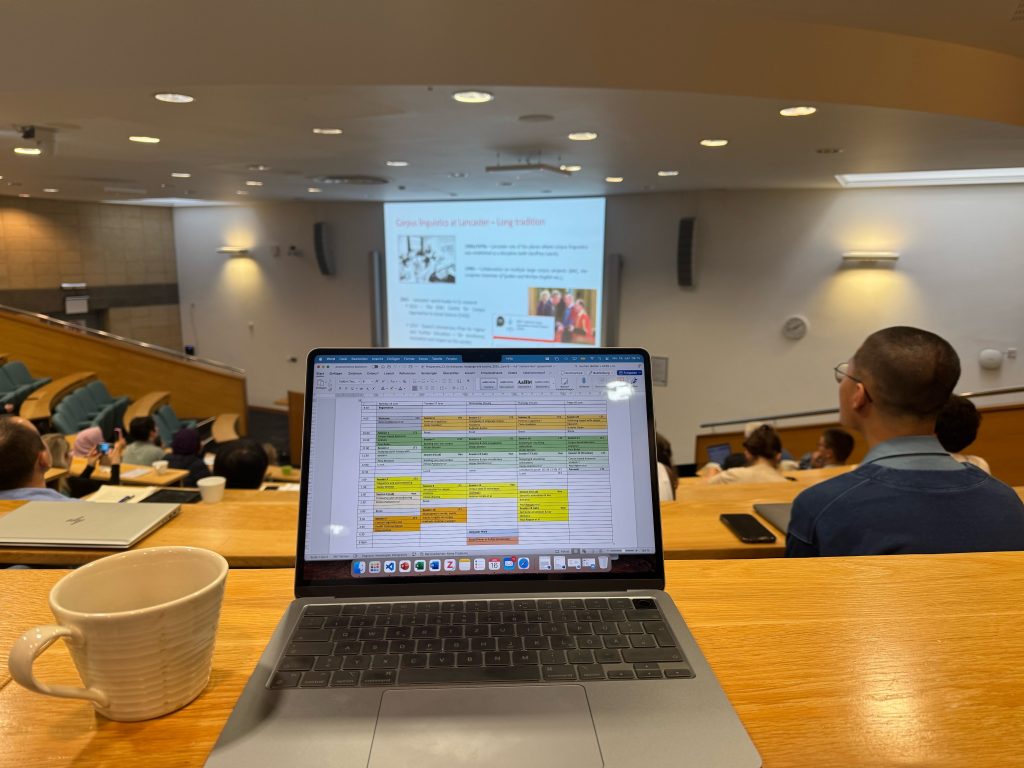
Why did I choose Lancaster University for my research stay?
Lancaster University is one of the world’s leading institutions in linguistics, currently ranked third globally, and is internationally recognized for its pioneering work in discourse and corpus linguistics. I was very happy that when I contacted Professor Vaclav Brezina, he invited me to visit the Centre for Corpus Approaches (CASS).
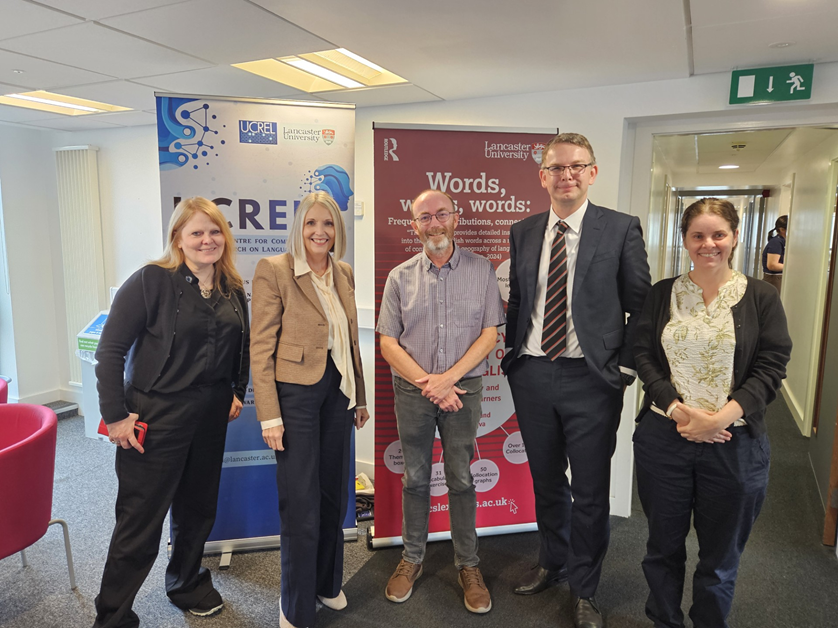
I had the opportunity to spend nine weeks in CASS at Lancaster University from June until the beginning of August 2025. To deepen my corpus linguistic knowledge, I participated in the Summer School “Corpus Linguistics for the Analysis of Language, Discourse, and Society”. This Summer School provided a comprehensive introduction to current corpus-based research approaches and demonstrated how linguistic methods can be applied to the analysis of language in various contexts. I also had the opportunity to explore a range of corpus tools developed at Lancaster University, which are widely used in linguistic research. I can highly recommend participating in the summer school, there is something to learn for everyone.
What made the experience particularly enriching, and how did engaging with Lancaster’s distinct research traditions deepen my understanding in discourse and corpus linguistics?
The discussions about different research traditions in corpus linguistics were very inspiring. While my own academic background is shaped by somewhat different methodological perspectives from Germany, engaging with Lancaster’s distinct approach offered new insights and fostered stimulating discussions about the theoretical and practical dimensions of corpus-based analysis. Working on this question also gave me the chance to deepen my understanding of statistical methods and to reflect on how linguistic data can be used to examine such complex phenomena.
Beyond the academic training, I had many opportunities to interact with scholars from around the world through reading groups, informal discussions, and collaborative sessions. These exchanges not only helped me to broaden my methodological understanding but also led to new research ideas and international connections. I also gained a deeper appreciation for how corpus linguistics can contribute to society – for example, by revealing underlying patterns in public debates, helping to understand social change, and promoting evidence-based perspectives on language use.
In summary
Overall, my time at Lancaster University was an immensely rewarding and inspiring experience, both professionally and personally. I am very grateful for the warm welcome, the intellectually stimulating environment, and the opportunity to learn from leading experts in the field. I am very thankful to Professor Vaclav Brezina that he made this research stay possible and that he was my contact person during my stay. I also want to thank my supervisors Professor Ekkehard Felder and Dr. Maria Becker for their support and want to thank the Graduate Academy of the University of Heidelberg who funded the stay with a mobility grant.
I hope to maintain close contact with Lancaster University and look forward to exploring future collaborations in research and teaching.