Lancaster University’s recent visit by Czech Ambassador Václav Bartuška and Consul General David Frous offered an important opportunity for researchers at the ESRC Centre for Corpus Approaches to Social Science (CASS) to demonstrate how corpus linguistics can contribute to understanding major societal and policy challenges – including one of the defining issues of our time: energy security.
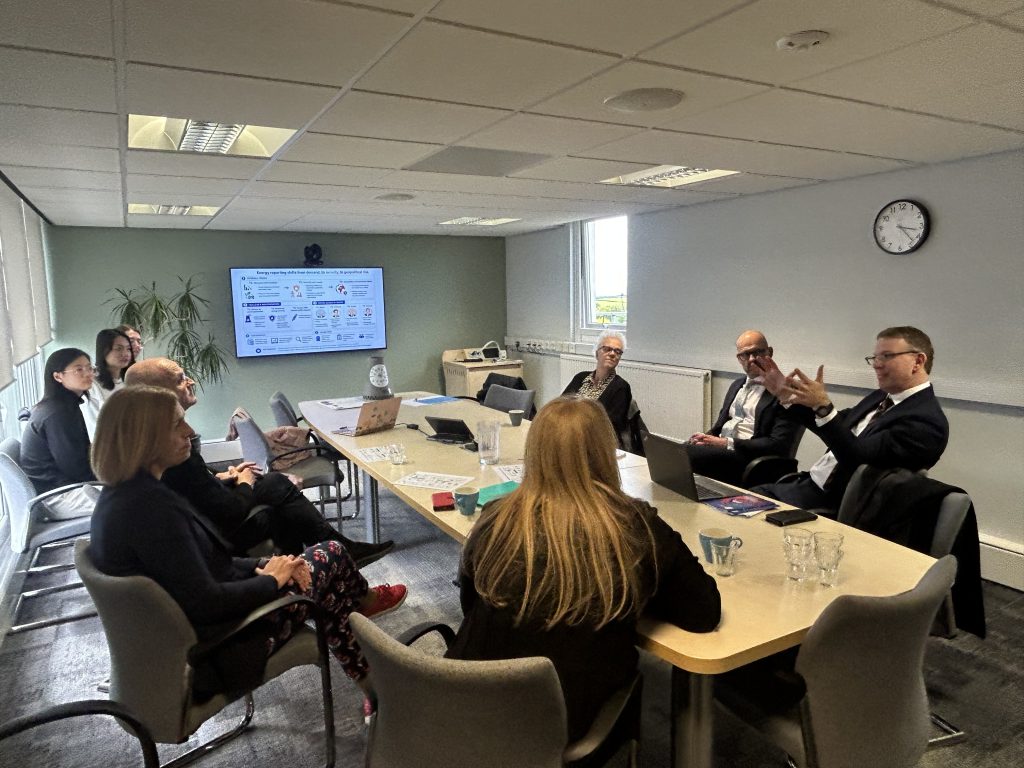
Left to right: Dr Emma Putland, Dr Yufeng (Kiki) Liu, Trina He, Czech Ambassador Václav Bartuška, Prof Radka Newton, Prof Rebecca Lingwood, Prof Vaclav Brezina, Czech Consul General David Frous, Prof Elena Semino.
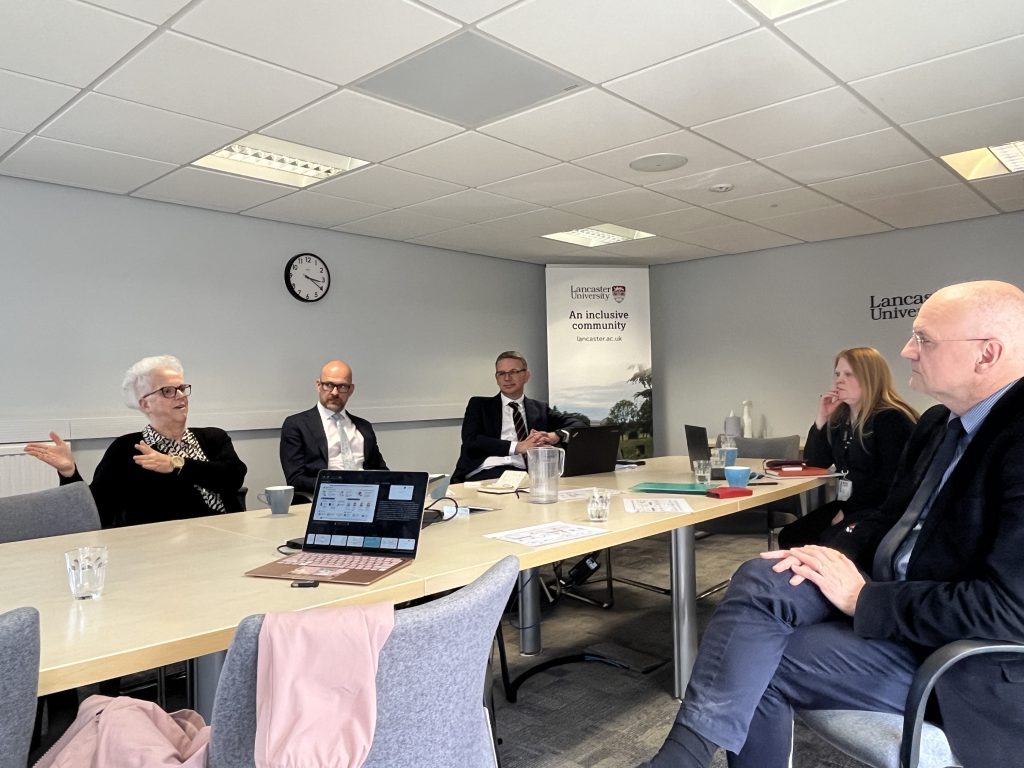
Left to right: Prof Elena Semino, Czech Consul General David Frous, Prof Vaclav Brezina, Prof Rebecca Lingwood, Czech Ambassador Václav Bartuška.
During the meeting, CASS researchers discussed the growing importance of corpus methods for analysing public discourse, political narratives and societal change at scale. By examining patterns across billions of words of naturally occurring language, corpus linguistics provides a unique evidence base for understanding how key issues are framed over time, how public concerns evolve and how political priorities shift in response to global events.
Given Ambassador Bartuška’s internationally recognised expertise in European energy security, the discussion focused on language surrounding nuclear energy and energy resilience. The CASS team presented findings from two major corpora. The first drew on the Hansard Corpus containing over two billion words of UK parliamentary debate to trace how the term nuclear has evolved in British political discourse since the Second World War. The second used a bespoke two-million-word corpus of recent British newspaper reporting capturing developments since 2020, including the impact of Russia’s war in Ukraine, ongoing debates around European energy independence, and the more recent effects of tensions surrounding the US–Israel conflict with Iran on global energy security narratives.
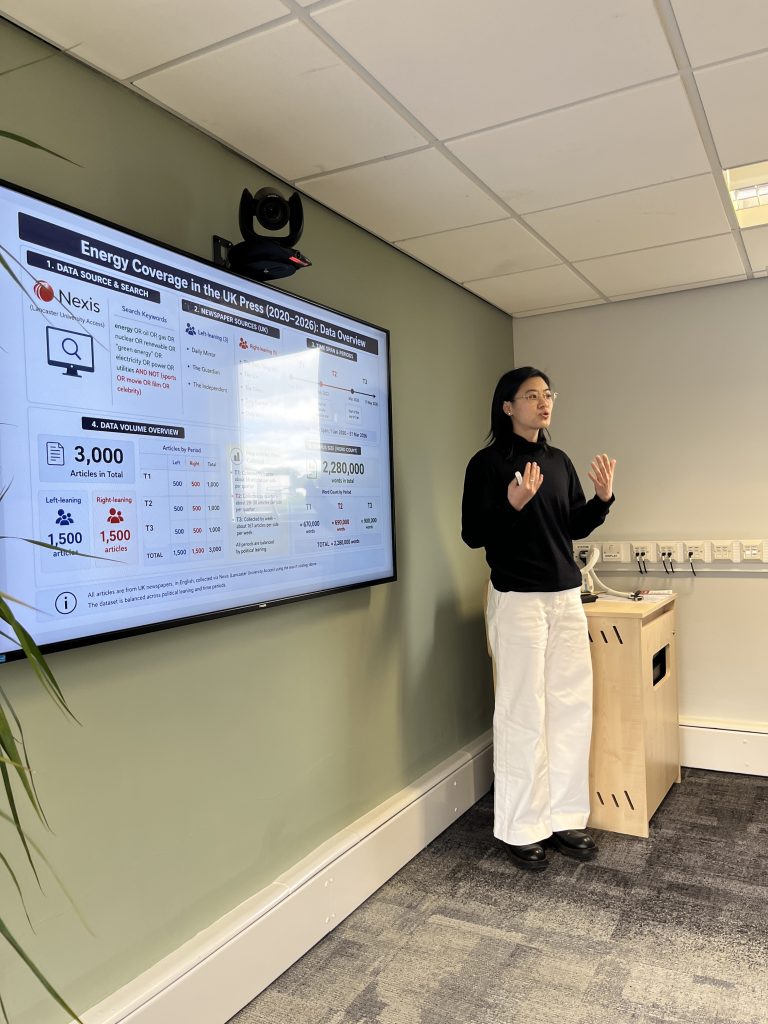
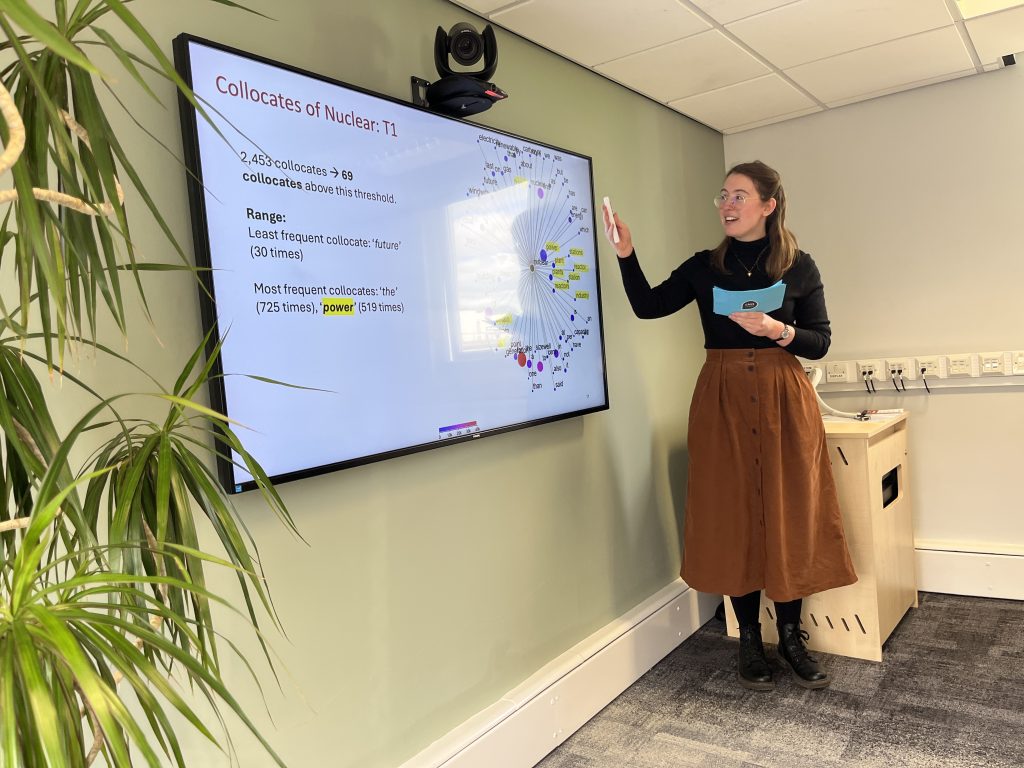
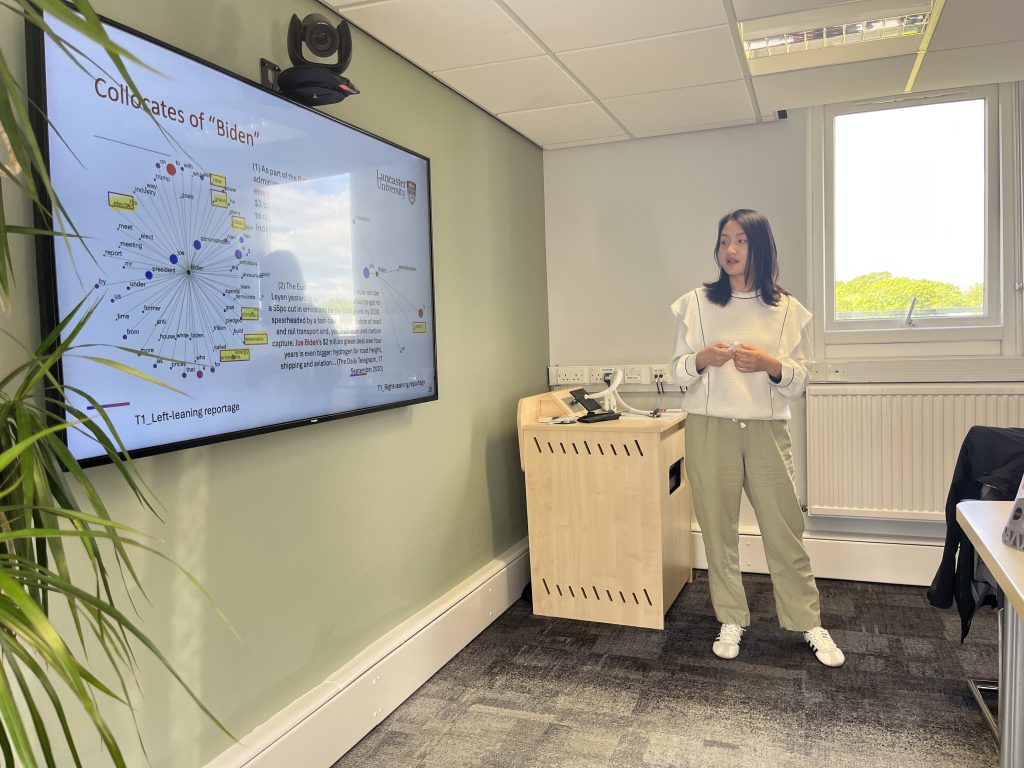
CASS team: Trina He, Dr Yufeng (Kiki) Liu and Dr Emma Putland
The analyses illustrated how language around energy and nuclear energy in particular has shifted significantly over time. The data revealed the persistence of competing narratives balancing opportunity, risk, innovation and public concern.
One particularly engaging aspect of the meeting explored how corpus findings can be communicated beyond academia. As pictured below, during the visit the researchers presented the Ambassador with a specially designed 3D-printed model of a nuclear reactor cooling tower. The hyperboloid structure visualised corpus data spatially: positive collocates associated with nuclear were displayed on one side of the structure, while negative associations appeared on the other. The model served as a creative demonstration of how corpus linguistics can transform complex quantitative findings into accessible and tangible forms for wider audiences.
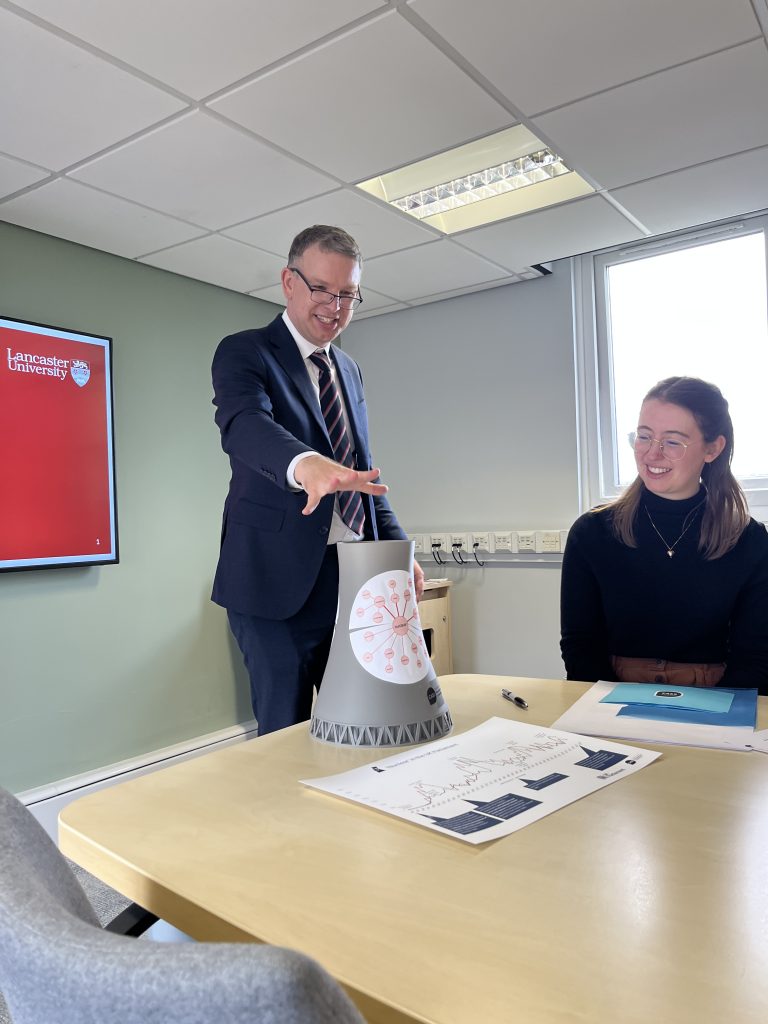
Prof Vaclav Brezina and Dr Emma Putland
The visit also reinforced the broader role of CASS research in contributing to contemporary debates that extend well beyond linguistics itself. By analysing how societies talk about issues such as energy, security, conflict and sustainability, corpus methods can offer invaluable insights for policymakers, institutions and international partners navigating an increasingly complex geopolitical landscape.