Eleven years ago, CASS received one of the UK’s most prestigious recognitions for higher education. This week as part of a visit by Nichola Tasker, CEO of the Royal Anniversary Trust, we had the opportunity to look back, celebrate how far we have come and look ahead to the future of corpus linguistics.
In 2015, the ESRC Centre for Corpus Approaches to Social Science (CASS) at Lancaster University was awarded the Queen’s Anniversary Prize for Higher and Further Education, recognising the Centre’s outstanding contribution to corpus linguistics and its impact on research, society and the wider world.
The award recognised a long tradition of pioneering work at Lancaster in the computer-assisted analysis of language. By bringing together computational technology, large collections of language data and rigorous linguistic analysis, researchers at Lancaster had demonstrated how studying millions – and increasingly billions – of words could provide new insights into language and society.
The announcement in 2015 was a very special moment for everyone involved with CASS and for the generations of researchers whose work had laid the foundations for the Centre.
A very special memory
One of the great memories from that time was travelling to Buckingham Palace to receive the royal recognition.
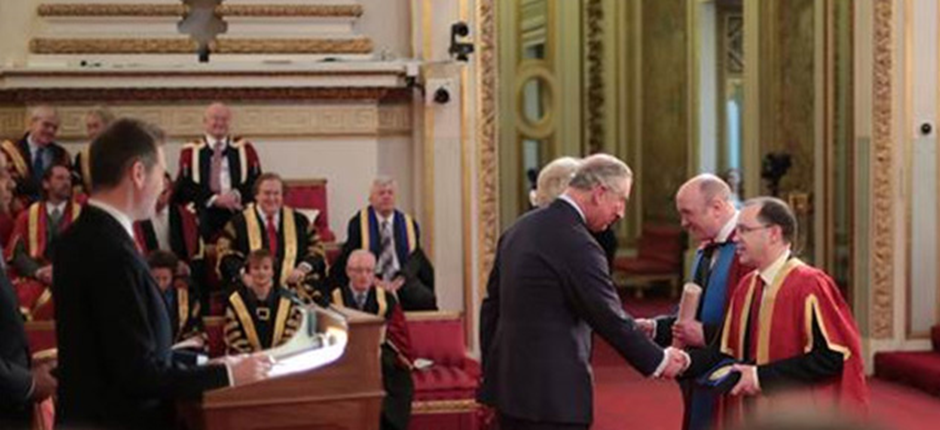
Professor Tony McEnery and Professor Mark Smith receiving the Queen’s Anniversary Prize at Buckingham Palace in 2015
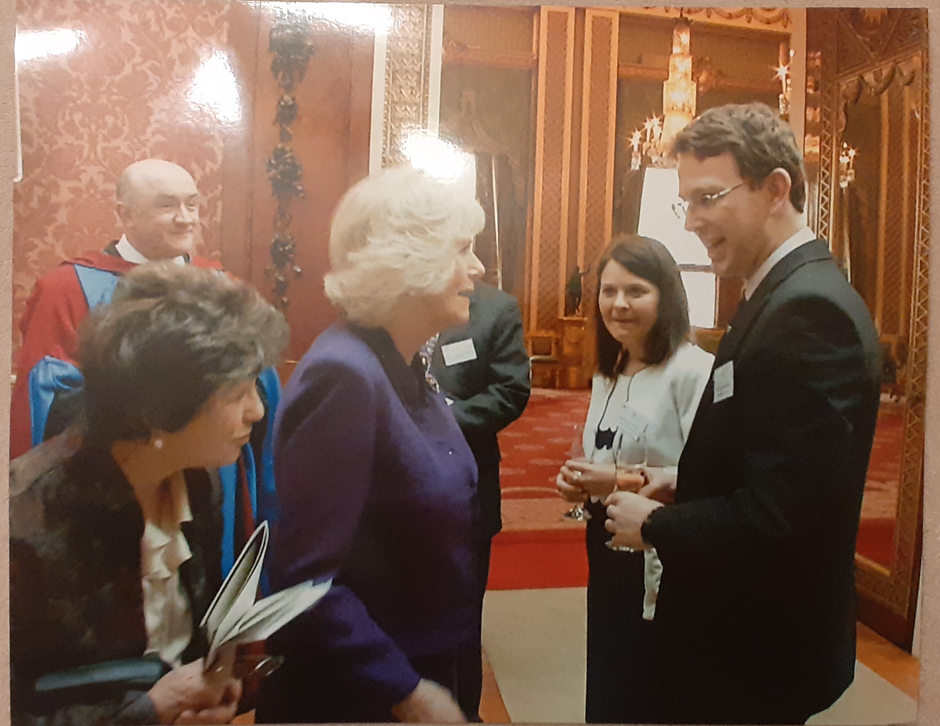
The CASS team at the reception at Buckingham Palace following the presentation of the Queen’s Anniversary Prize in 2015.
The Prize was recognition not simply of one project or one generation of researchers, but of a tradition of scholarship that had developed at Lancaster over many years since the 1970s.
Eleven years on, that sentiment still feels very relevant.
The ‘Show & Tell’ Session
This week, we were delighted to welcome Nichola Tasker, Chief Executive Officer of the Royal Anniversary Trust, to Lancaster.
The Royal Anniversary Trust is the organisation responsible for the prestigious prizes, which are now known as the Queen Elizabeth Prizes for Education. The Trust celebrates and champions outstanding work across universities and colleges throughout the UK, recognising excellence, innovation and positive social impact.
Nichola Tasker’s visit provided an opportunity to do something that is not always easy to do in academic life: to stop, look back and ask what has happened since that moment in 2015.
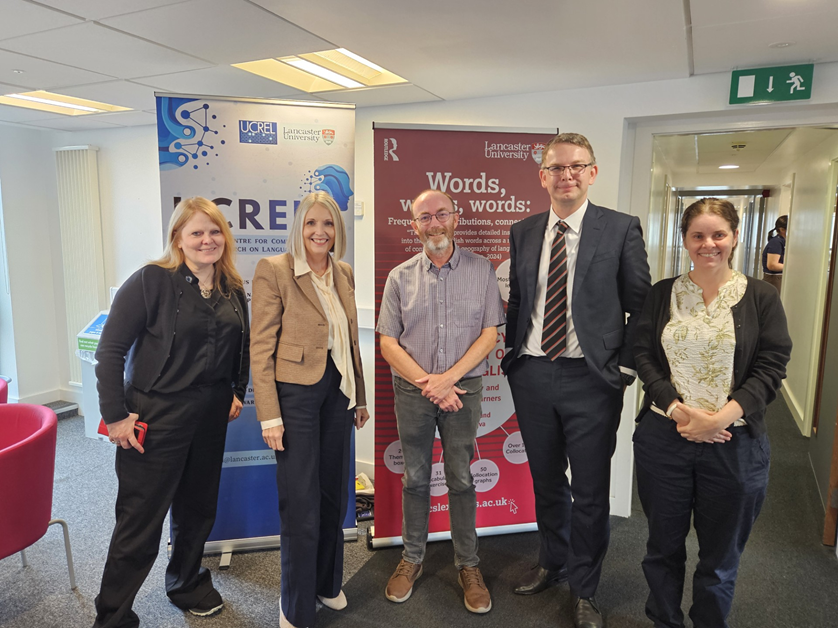
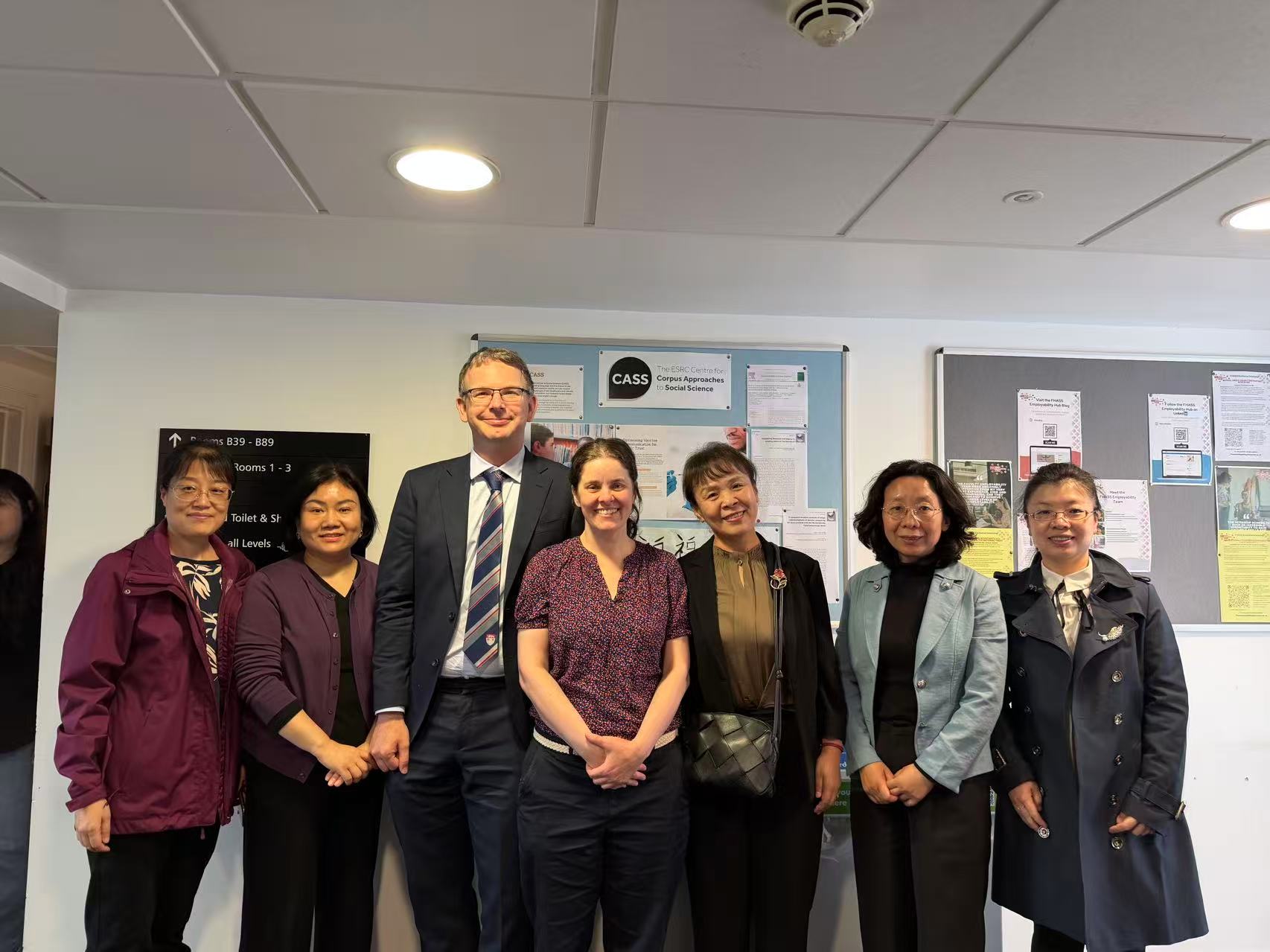
2026: Professor Rebecca Lingwood, Deputy Vice-Chancellor; Nichola Tasker, CEO of the Royal Anniversary Trust; Professor Paul Rayson, Director of UCREL; Professor Vaclav Brezina, Co-Director of CASS; Dr Dana Gablasova, Director of Studies in Corpus Linguistics.
And there was plenty to show.
CASS has continued to grow as an international centre of excellence in computational analysis of language. Since its foundation in 2013, the Centre has published hundreds of research papers and books, trained more than 80,000 people worldwide in corpus methods and attracted more than £20 million in external research funding.
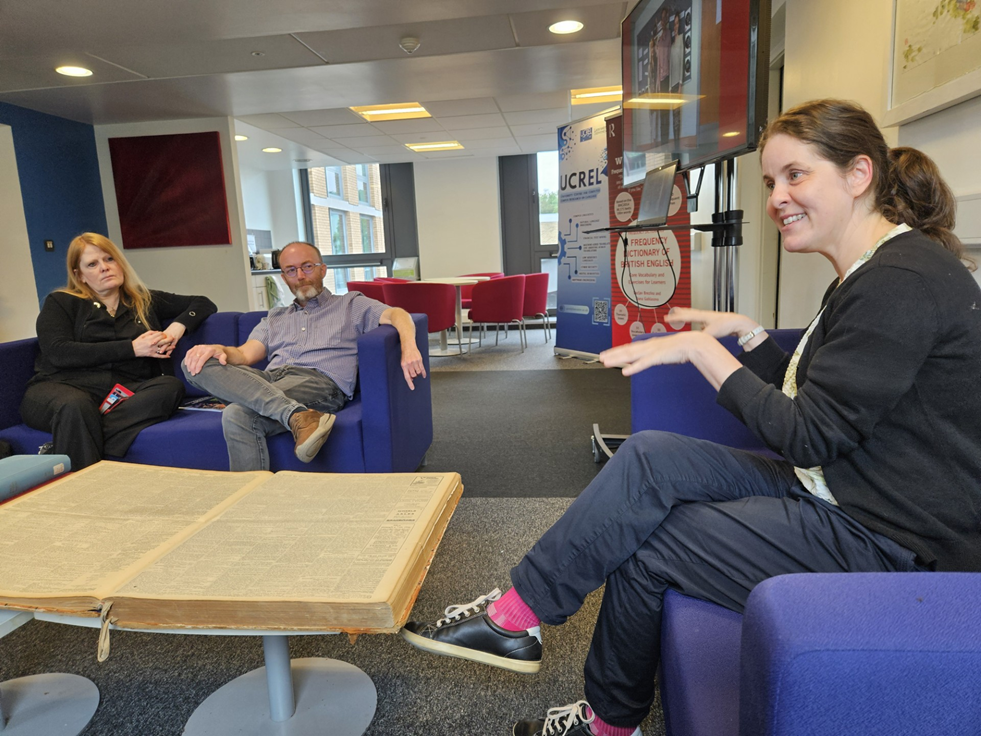
2026: The ‘Show and Tell’ session
During Nichola Tasker’s visit, we held a CASS Show & Tell session, hosted by Professor Vaclav Brezina, bringing together some of the Centre’s work over the years. The session focused particularly on our international training events and cutting-edge research in areas such as discourses on nuclear energy and energy sustainability, lexicography, political and newspaper discourse, language learning and testing.
It was also an opportunity to reflect on something that now seems remarkably visionary. Corpus linguistics anticipated many aspects of what has become central to today’s AI revolution. Long before generative AI became part of everyday conversation, corpus linguists were developing methods for working computationally with enormous collections of naturally occurring language. We learned how to build and curate datasets, identify patterns across millions and billions of words, quantify linguistic phenomena, compare different varieties and contexts and combine computational methods with careful human interpretation.
Looking forward
There is, of course, something special about revisiting a milestone. In 2015, corpus linguistics was recognised for demonstrating what could be achieved when language, computation and social science were brought together. In 2026, as AI transforms the way we work with language, those principles are more relevant than ever. Eleven years on, CASS continues to show what corpus linguistics can do – and why rigorous, evidence-based approaches to language matter for the future of social science and world-leading scholarship.
Here’s to the next chapter!